One of the things I love most about living in the city is that we’re so close to the action, and there’s no shortage of action across Brisbane right now, especially over the river in South Brisbane. Not only did it fundamentally change while we were living overseas, but it continues to be an area that’s still going through an unfathomable amount of change. It’s easy to lose count of the number of newly developed, planned and currently under construction apartment projects.
It’s truly eye opening!
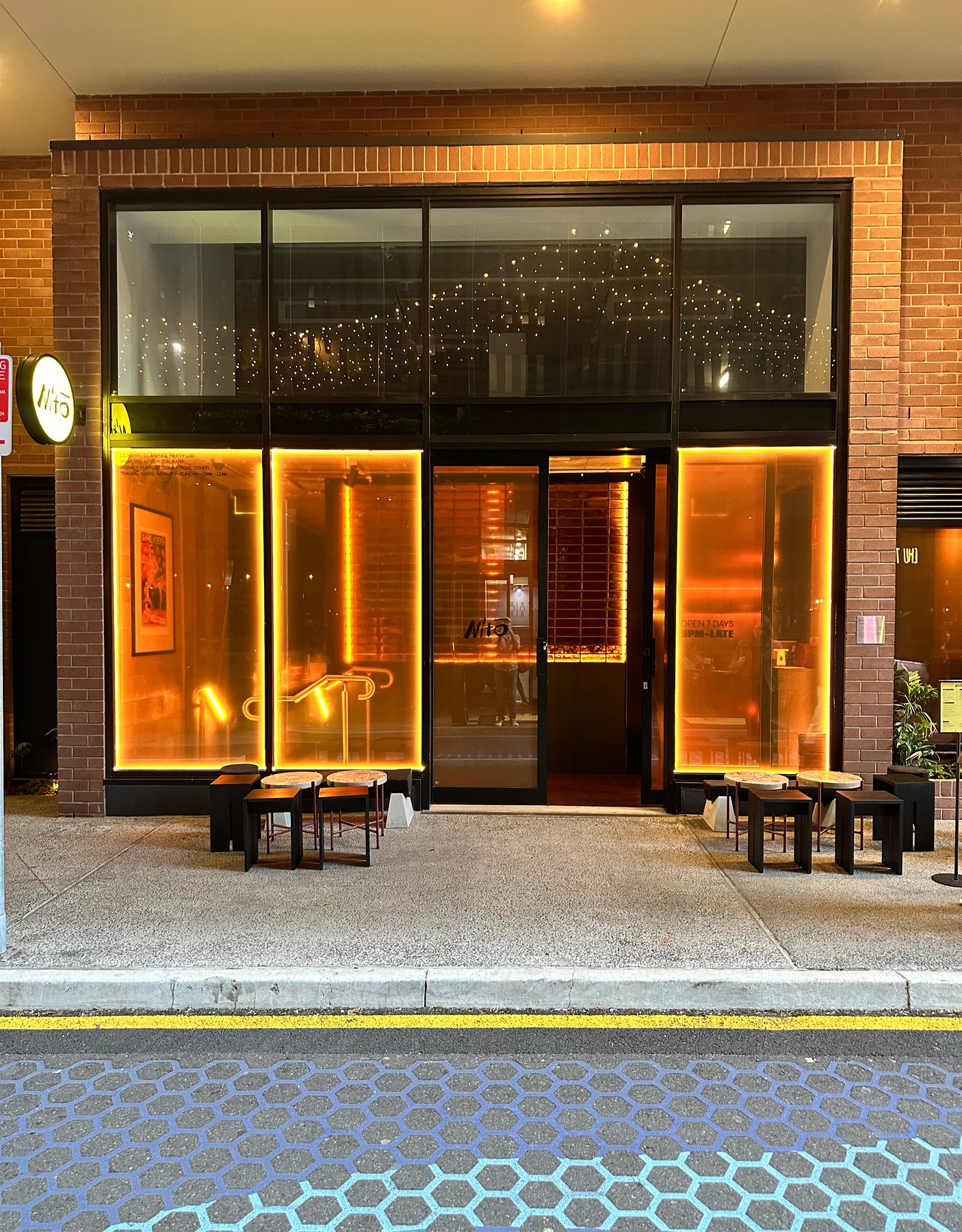
What I also love about areas like South Brisbane is that all those new residents seem to bring fresh energy and a steady stream of new restaurants. Between Melbourne Street and Fish Lane, there’s already plenty to keep us intrigued, and with plans to redevelop the old Pauls milk factory site on Montague Road, the neighbourhood is only going to keep changing. This time, it was the newly opened Nito that caught my attention, largely because it’s been developed by the crew behind one of my favourite restaurants, Clarence.
Behind Nito are Clarence’s Ben McShane and Matt Kuhnemann, with Max Burns heading up the kitchen and Zoe O’Mahoney looking after the wine. Coincidentally, the whole crew have a London connection with all four having spent time at Two Lights. The name Nitō means “two lights” in Japanese, bringing a little of that shared history to Fish Lane. Ben also brings Japanese experience from Kiyomi on the Gold Coast and Umu in London, while Max’s background includes Stokehouse Q.
Interestingly, some of the inspiration came from a small Mexican restaurant in Paris, where Ben was taken by the way local ingredients gave the cooking a character of its own. That idea found its way into Nito, with Japanese techniques applied to Queensland produce and much of the menu built around a charcoal grill. It’s a different direction from Clarence, with a more casual menu of snacks, raw dishes and larger plates to share.
We weren’t dining alone this time, but catching up with good mate (and fellow food blogger) Cynthia from JustCozItsTuesday. The catch-up was long overdue and a great distraction from a super busy week doing our regular day jobs. The girl and I are also a bit injured at the moment, each with respective back injuries in various states of disrepair, so it was an extra reason to take our minds off being in a bit of pain.
PSA, did you know that around four in five Australians experience back pain at some point in their lives? Make sure you look after yours
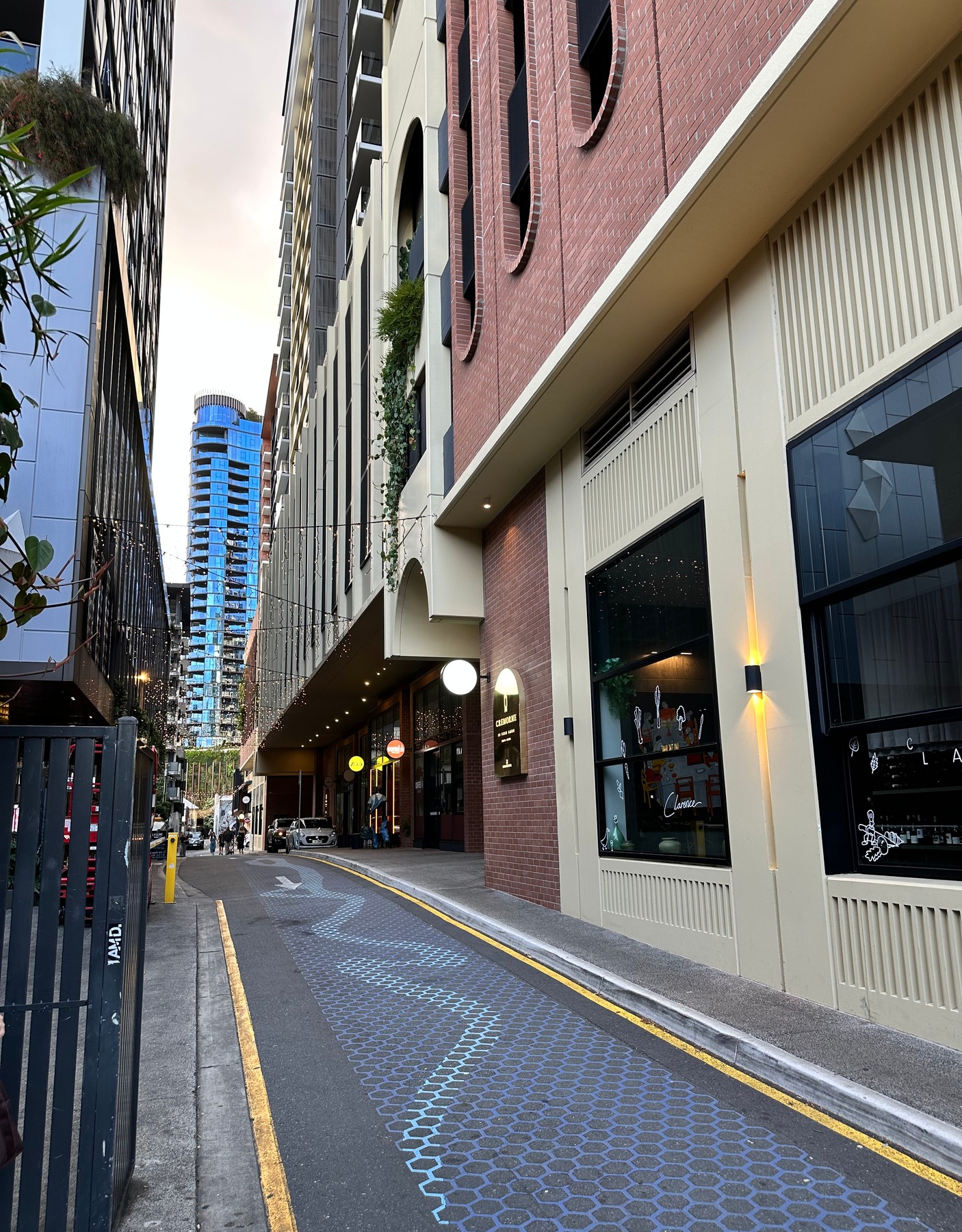
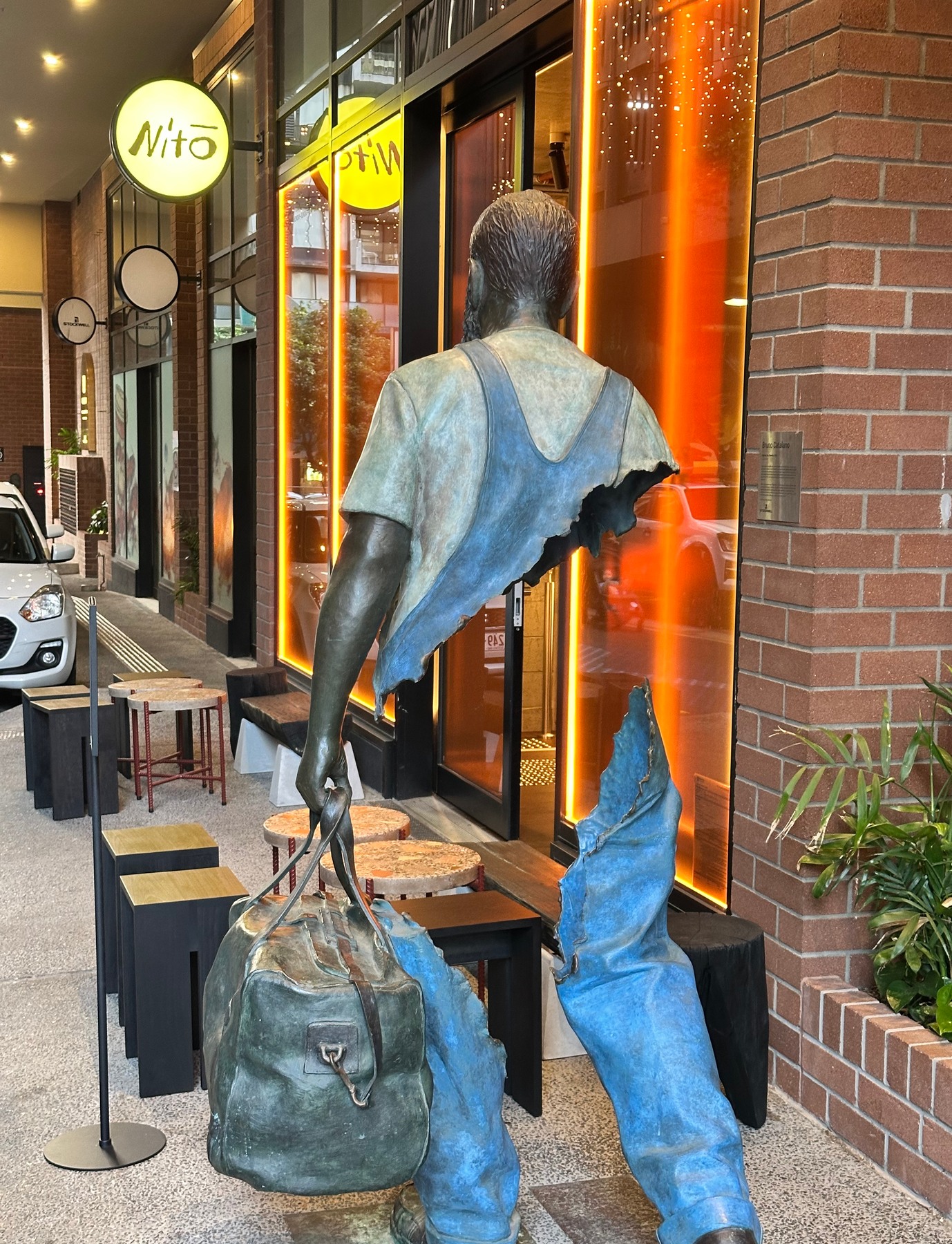
Anyway, we’d normally walk across the river to Fish Lane, but decided the bus would be a more sensible option this time. I generally don’t love catching public transport, but it’s actually pretty convenient when going from the CBD to South Brisbane, and we arrived well ahead of our 6pm reservation. That gave me some time to take photos of the cool art in Fish Lane before heading into the restaurant a little early to have a look around.
The interior is quite different from Clarence, which has lots of natural light coming in through the big windows at the front and side. Nito is darker and more enclosed, with low ceilings, dark timber and red and orange seating giving it something of a 1970s lounge feel, while exposed concrete and pipes overhead add an industrial touch. We didn’t have a lot of time to sticky-beak, as it turned out Cynthia was also super early. This suited us fine as we were pretty hungry and ready to get started.
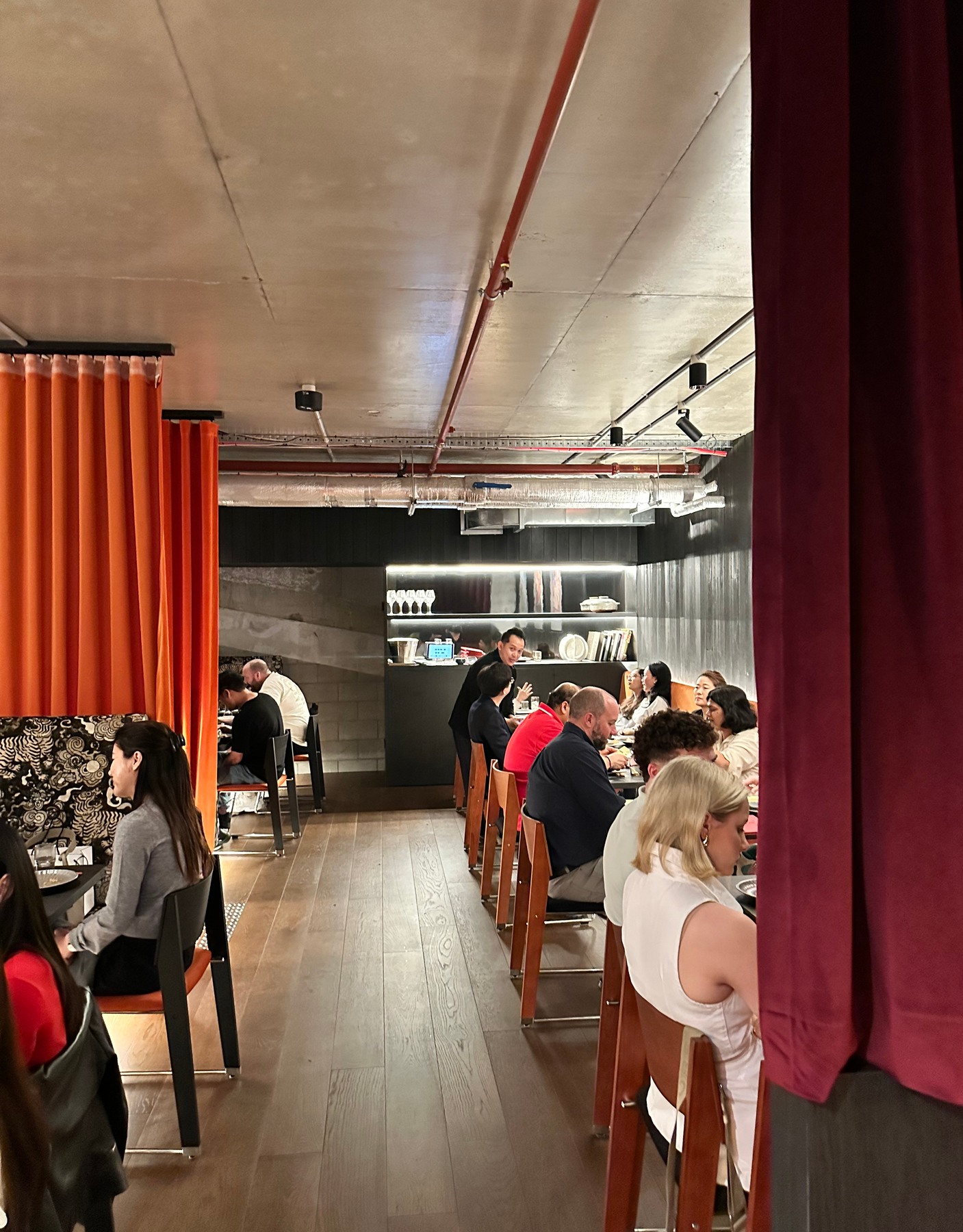
The dining room at Nito is split across two levels, with a sunken area on one side and raised seating on the other, both with views of the open kitchen. The chefs were plating on our side of the room, which gave us a good view of what was coming out. I also noticed an open flame in the back corner, where a grill fuelled by binchotan charcoal was being used to cook many of the proteins on the menu (and where their interesting flavours come from).
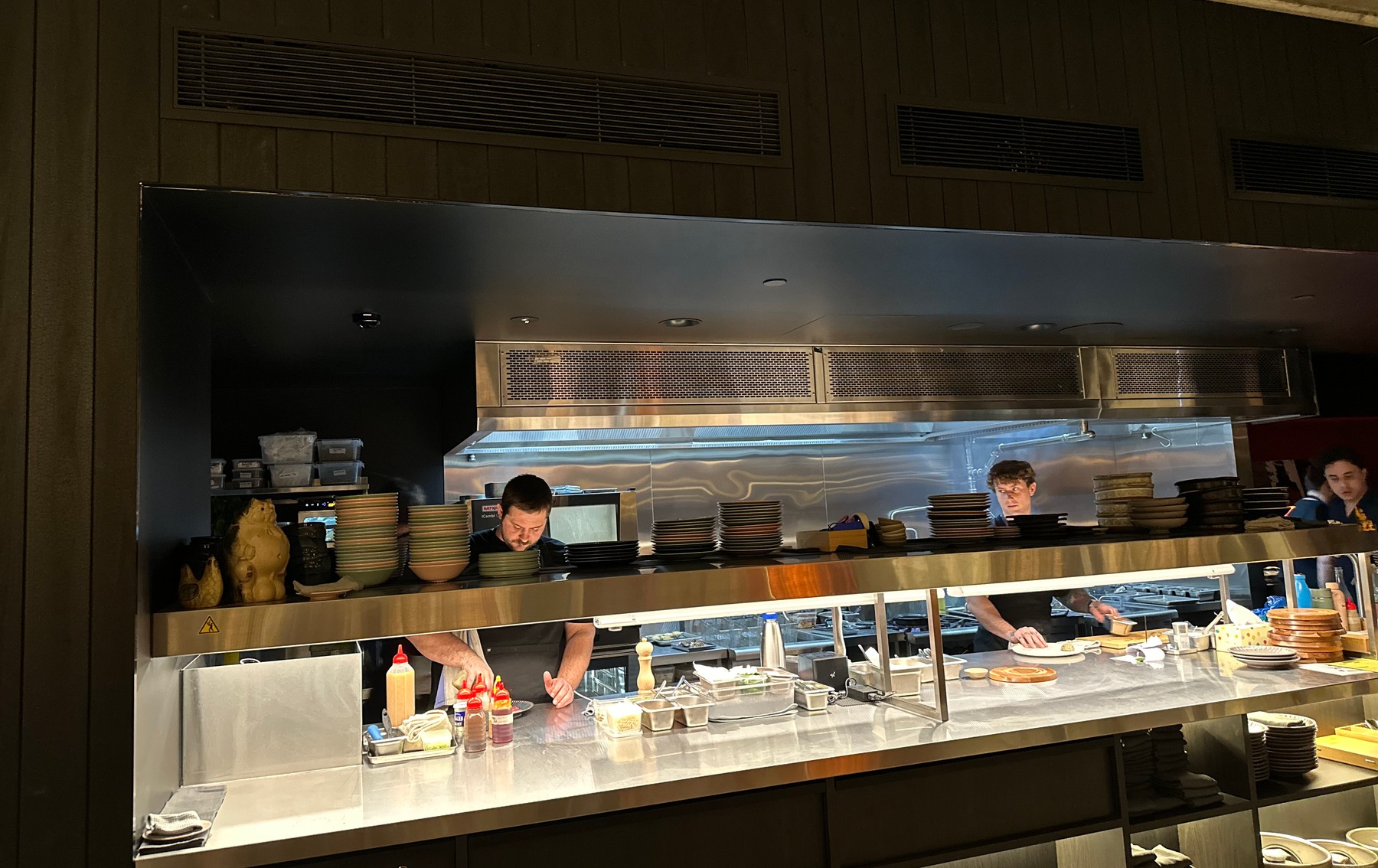
Nito is a Japanese style restaurant, and by that I mean it’s definitely influenced by Japanese cooking but didn’t feel like a stuffy and formal omakase style joint. It had shades of the casual European neighbourhood restaurants where the crew had spent some time, with Japanese flavours finding their way into dishes such as beef tartare tartlets and pavlova. The menu is very much about share dining, and since there were three of us this night, that worked out pretty well.
Of course, dining with another food blogger meant there were now two of us taking photos of every plate, which pretty much doubled the time between the food arriving and us finally getting to dig in. The girl always finds this amusing, and proceeded to take photos of Cynthia and I looking all serious as we photographed our dinner. Apparently watching us do this is a source of considerable entertainment.
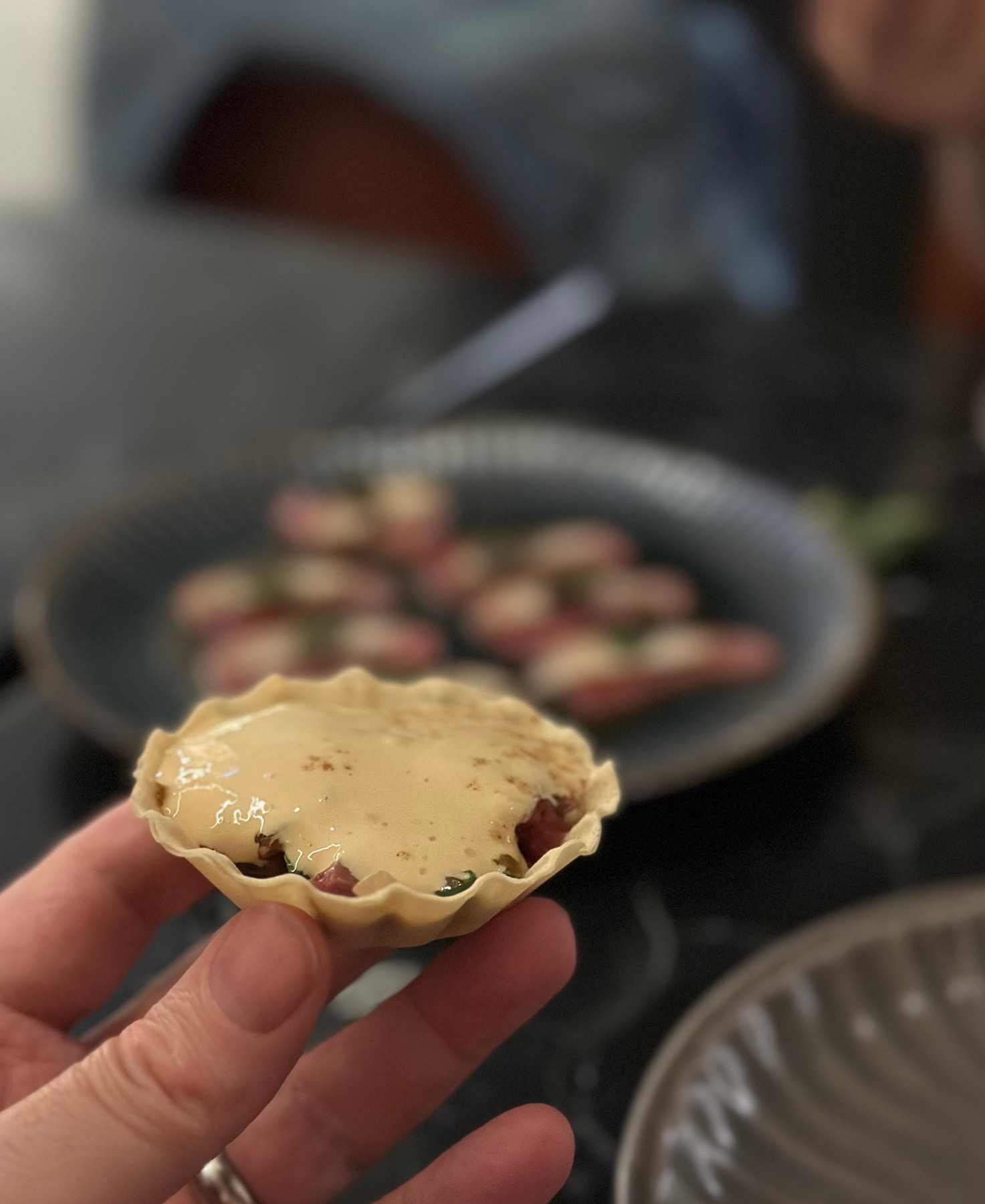
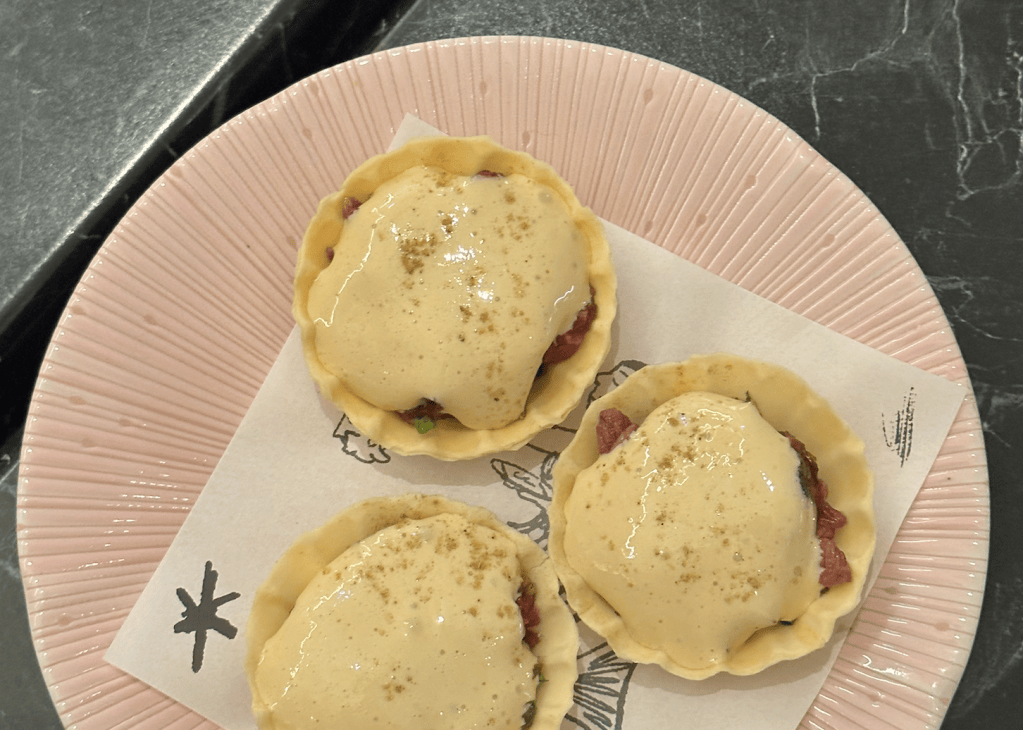
The beef tartare tartlets came first, three dainty little tarts with really thin casings and a foamy BOSS coffee cream piled on top, almost completely hiding the finely chopped beef underneath. Once we got into them, the combination was utterly delicious; the cream mixed beautifully with the beef, giving a rich, unctuous mouthful with a little nori flavour and an umami undertone. Despite how delicate they looked, the tartlet shells held firm and hadn’t gone soggy under the cream, so there was still some texture against the softer filling. Each lasted about three bites, and I’d happily have had another couple. They were one of the best elements of the meal.
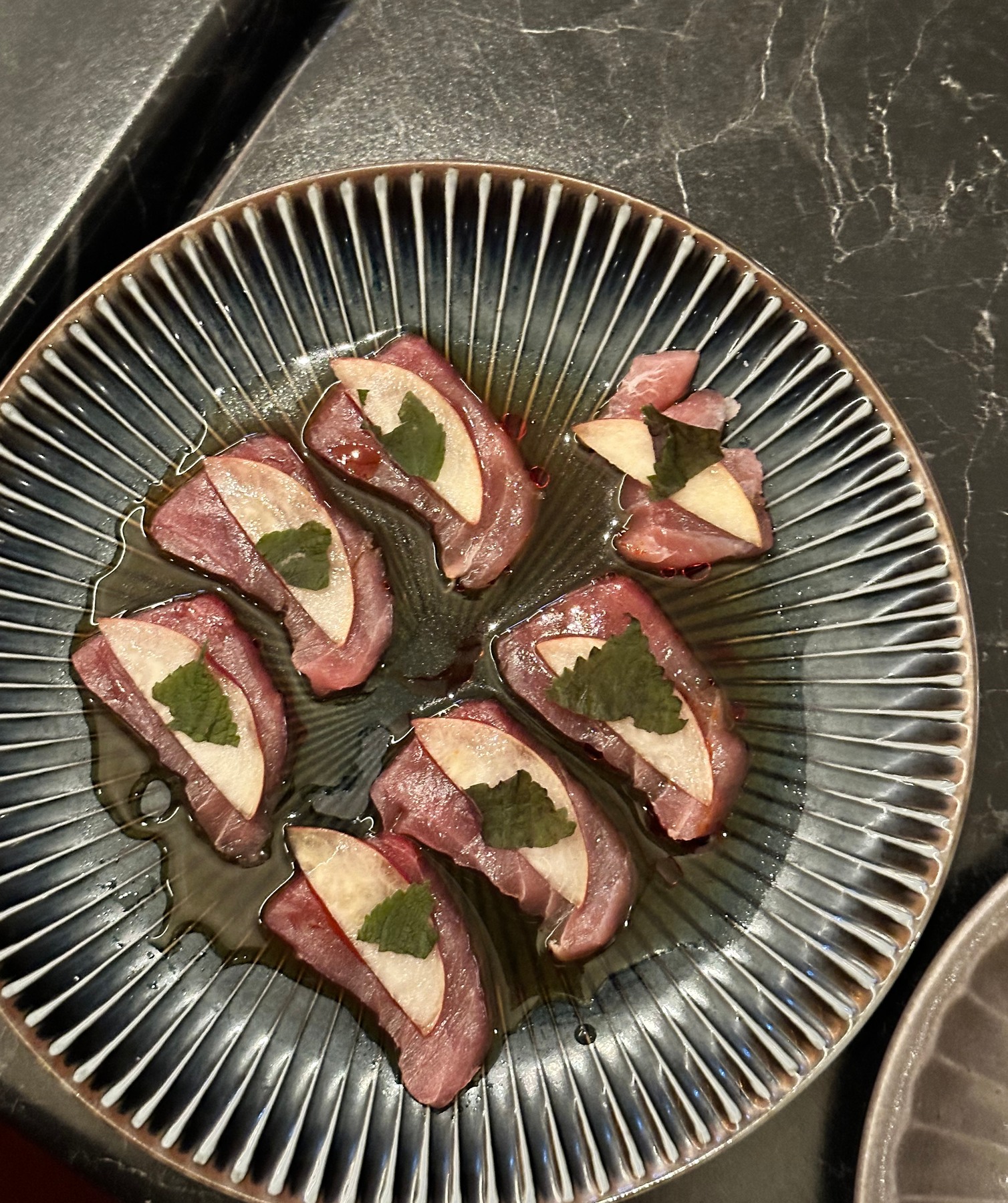
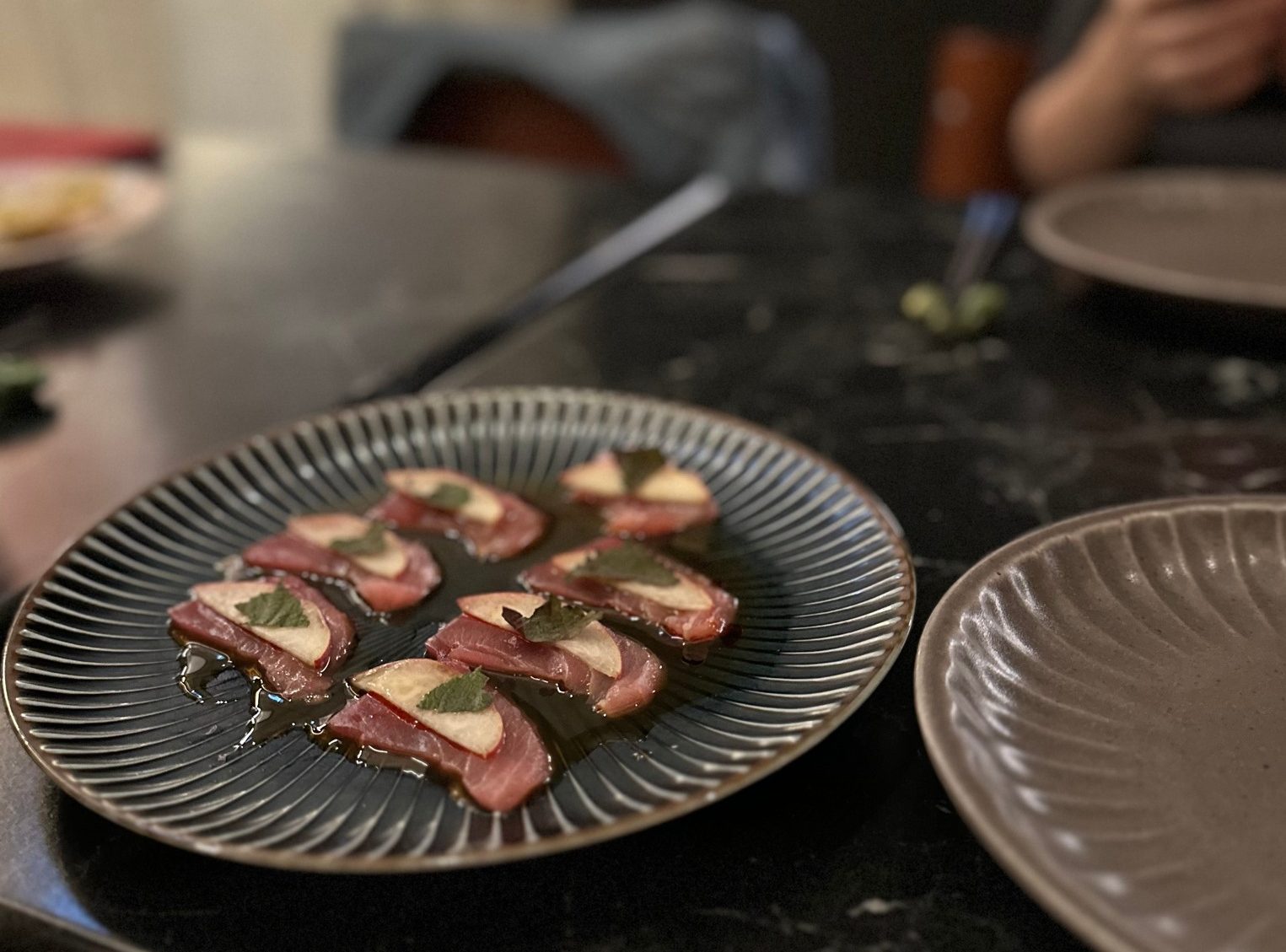
The yellowfin tuna with peach, bergamot ponzu and shiso was a really pretty plate of food, but unfortunately the balance wasn’t quite right. Both the tuna and peach had been sliced incredibly thin, and in the case of the fish, so thin that we’d lost much of its texture and flavour. The ponzu and shiso were much more prominent, overpowering the ingredient that should have been the main reason for eating the dish.
They also came with 7 pieces, so there were some delicate negotiations about who would get the extra piece, which was a win for me (thanks girls) – but why 7 pieces for 3 people, it just adds a little unnecessary angst.
We mentioned this to one of the team after the meal; a thicker slice of tuna would have given us more texture and allowed the fish to hold its own against the ponzu and shiso.
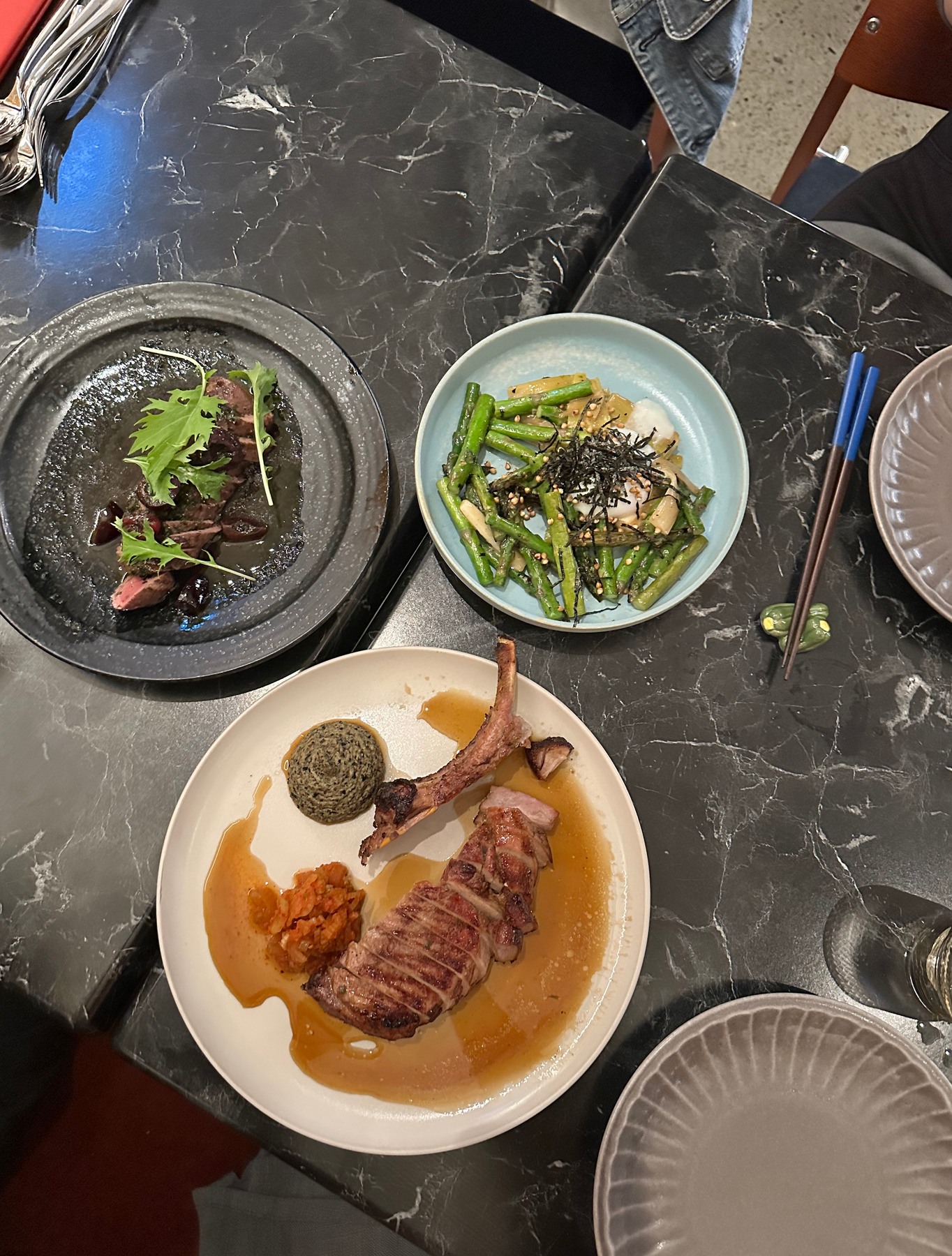
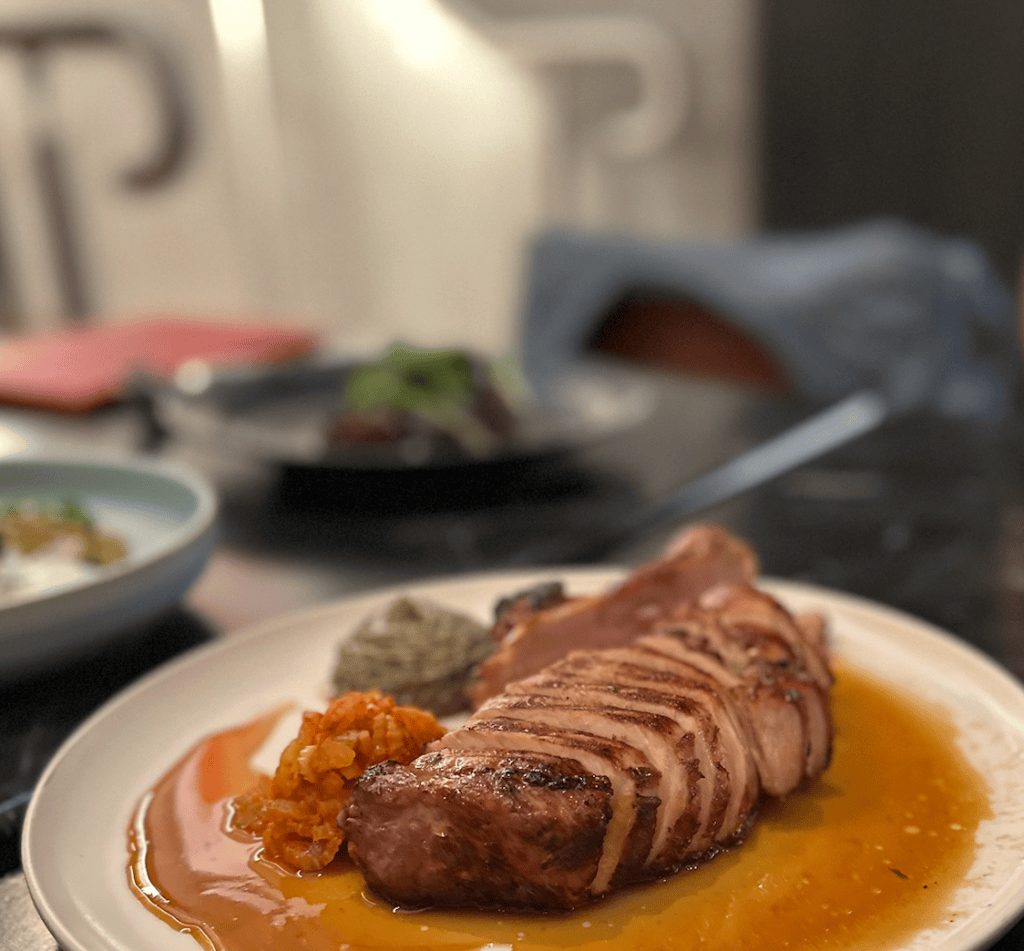
Our three dishes from the yakimono section arrived together, and the Gooralie pork chop was easily our favourite. Gooralie is a family-run pork farm near Goondiwindi, and the chop had been taken off the bone, sliced and arranged quite artfully on the plate. It was beautifully presented for something that could so easily have looked too rustic, with a lovely char around the outside and meat that was still moist and delicious. Dryness is always the risk with a pork chop, but there was none of that here; the char added another level of flavour, while the apple tare and nori mustard were well balanced against the pork, with celery kimchi completing the dish.
There was a little discussion towards the end about who would get the bone to chew on. As Cynthia had let me have the last actual slice of pork, we thought it was only fair that she got the bone and the extra meat still attached to it, which she happily devoured.
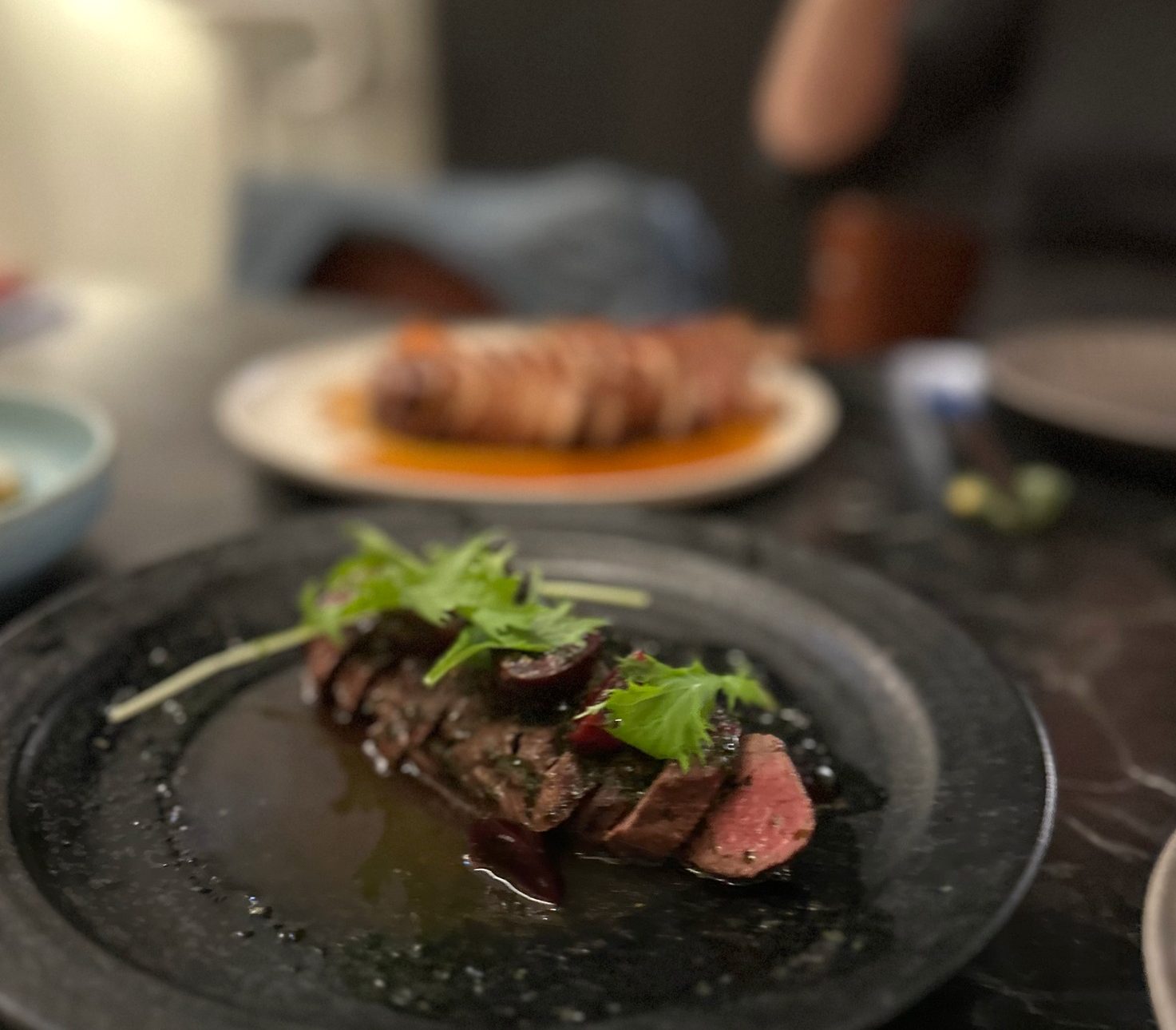
Whenever venison appears on a menu, there’s a pretty good chance the girl is going to want it, and the wild-shot venison with cherries, sansho and nori was no exception. The meat was a beautiful cut, cooked rare just as you’d expect, and the combination with cherries was excellent. Where it divided the table was the fine dusting of nori around the outside, which I found really bitter. I pick up bitterness pretty strongly, and the contrast between what I was expecting from the venison and that coating was a little jarring, distracting from how well the meat had been cooked.
Cynthia and the girl didn’t have the same problem; both thought it was fine, and the girl still really liked the dish. It was very much a matter of my palate rather than a problem with the cooking. There were a couple of slices left once we’d finished, and after checking whether either of them wanted any more, I had them. So the nori certainly hadn’t put me off eating the venison but did leave me conflicted.
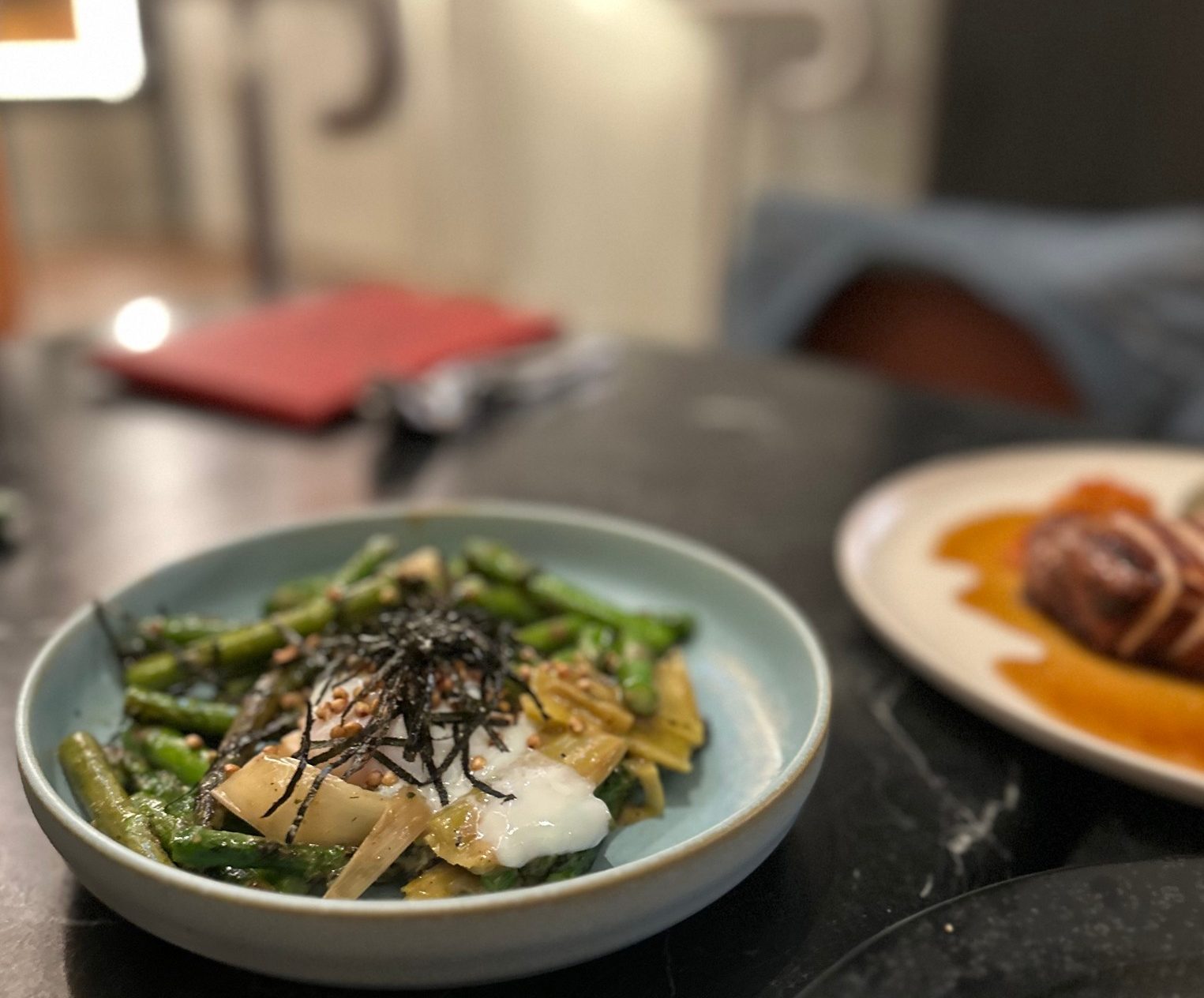
We ordered the asparagus to go with the two meats instead of something from the sides, though the soy-pickled tomatoes were tempting. It came with gomadare, onsen tamago, nori and buckwheat, and we were meant to break the egg and mix it all together before serving. The yolk brought it together nicely, with the buckwheat adding a bit of texture against the soft egg. The asparagus was cut short and well grilled, slightly sweet with none of that stringiness that can make it a chore to eat. It worked well with both the pork and the venison.
It was time for dessert and the options led us to an in-depth conversation and debate.
The girl and I had spotted the yuzu pavlova with blueberry and shiso and immediately knew what we were having, while Cynthia was considering the Neapolitan parfait with strawberry, matcha, French Earl Grey and waffle cookies. She had the tall, layered parfait you often see in Japan in mind, with the different components piled into a glass and whipped cream on top. I was pretty sure it would be the French version instead, a smooth, creamy frozen dessert served as a solid piece.
We called the waiter over to settle it, and once he’d confirmed that it was the French style, Cynthia decided she didn’t want dessert after all. He did try to convince her to give it a go, but she’d made up her mind and wasn’t going to budge.
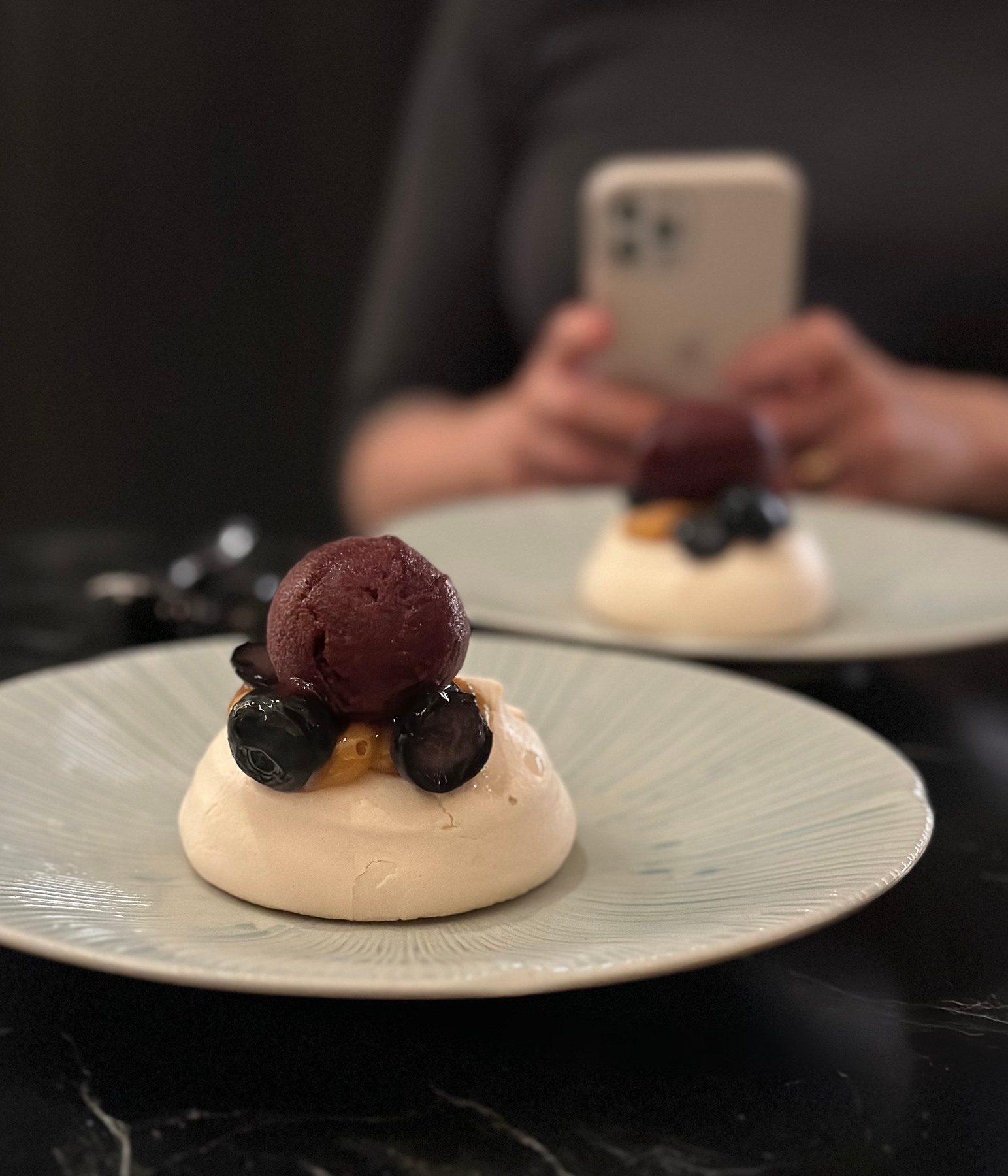
Which left the girl and I with our pavlovas. They were okay, with a fairly generic meringue casing topped with a sticky, gooey yuzu curd, then finished with a lovely sphere of blueberry ice cream. The yuzu was definitely the highlight, but the pavlova itself didn’t offer much to distinguish it from any number of others we’ve eaten; sweet and pleasant enough, but a little forgettable.
It prompted a conversation about how much difference a dedicated pastry chef can make, particularly when so many restaurant desserts seem to have become safer and simpler. This felt more like putting a few components together than creating something particularly interesting, which was a bit of a shame after some of the more inventive food we’d just eaten.
The entire time we were having dinner, there was a massive box of Brooki Bakehouse cookies sitting beside us, which seemed a little odd but made sense once Cynthia explained that they were for a kids’ party & definitely not for her. There’s a new Brooki just around the corner in Melbourne Street (one of the many new additions to South Brisbane) and so it had been a happy and convenient coincidence to have them so close.
The music had been groovy but largely in the background throughout dinner, until one track towards the end of our meal suddenly sounded as though the record was playing at double speed. The vocals became super high-pitched and otherworldly and super weird; it only lasted for a few moments, and just as I was about to say something, it reverted to normal. That prompted me to ask our waitress whether there was a turntable behind the bar, and she explained that the chef was also the DJ, which in and of itself is pretty damn cool.
We’d had a good night catching up with Cynthia, and Nito is certainly a welcome addition to South Brisbane. It had only been open about three weeks when we visited and was still finding its feet, but there was plenty to like, particularly those tartlets and the pork chop. We’d also contemplated the duck leg claypot rice and Murray cod, so there were other things on the menu that could easily have made it onto our table.
For me, though, if I was choosing between Nito’s Japanese style and the more Australian-French cooking at Clarence, I’d be more likely to head back to Clarence. Still, having both just a few doors apart on Fish Lane gives us another reason to keep heading across the river.