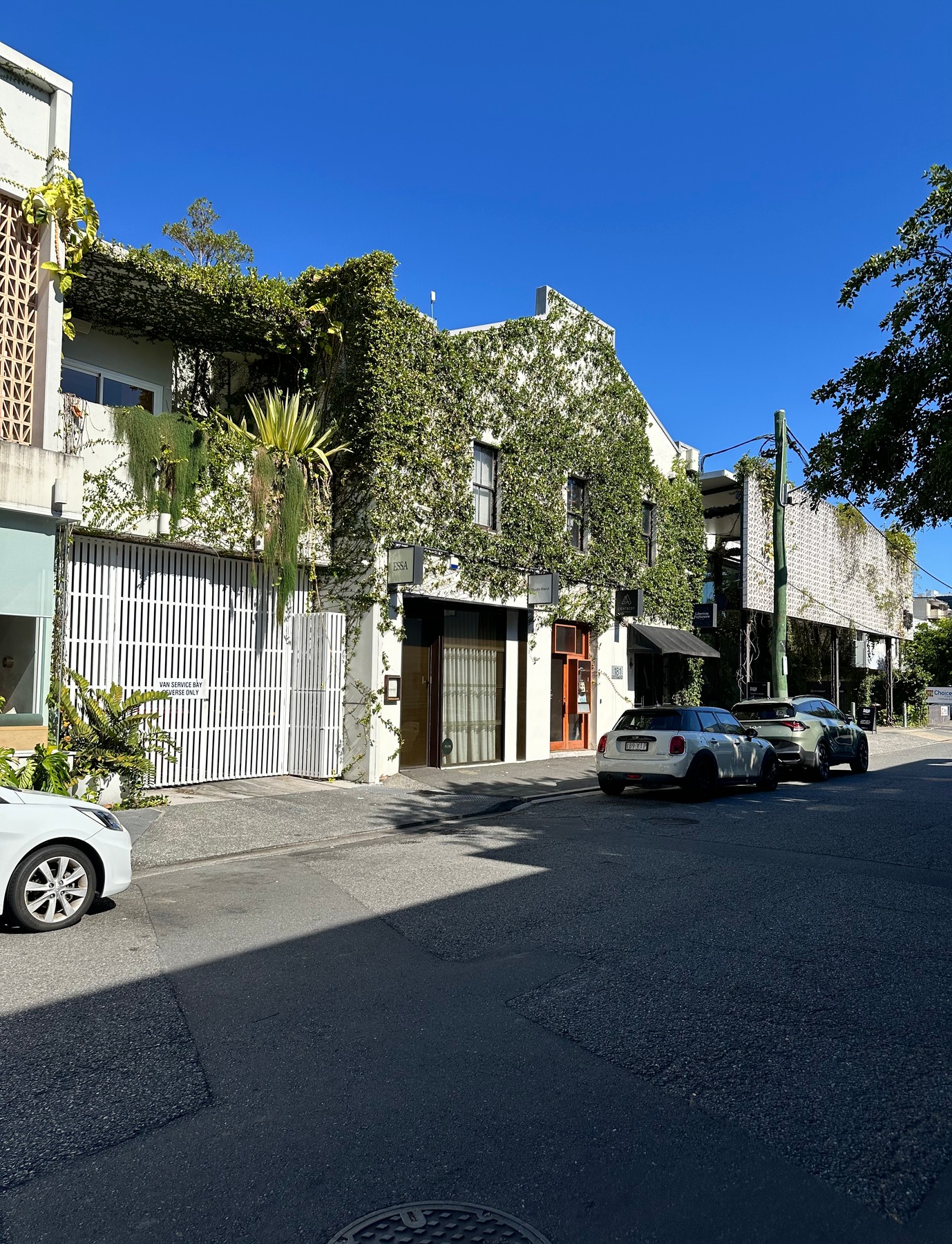
It’s usually somewhere around the middle of the week that the Girl and I start struggling with the question of what to have for dinner. There are plenty of restaurants we want to try, but on a Wednesday we’ve developed a pretty good fallback solution when we just can’t make up our mind; take the short walk from our apartment in the CBD to ESSA and let the kitchen work it out for us. We’ve been doing it quite a bit this year, to the point where one of Queensland’s better restaurants has become something of a de facto kitchen.
Which is a fairly fortunate position to find ourselves in, really.
You might be asking, what’s the big deal about Wednesdays at ESSA? It’s simple, every Wednesday ESSA runs their Test Kitchen, where the chefs put together five plates that give them a chance to play with produce and ideas, with a special soundtrack to go along with the food. While we’ve been on other nights to check out the regular menu, there’s something about the inventiveness of Wednesdays that keeps drawing us back. It’s casual, comfortable and easy to get along to, with food that is often spectacular; deciding what to have for dinner rarely works out quite so well.

For anyone who hasn’t made it along yet, ESSA opened on Robertson Street in Fortitude Valley in 2021, with chef and co-owner Phil Marchant and co-owner Angela Sclavos behind it. British-born Marchant had been head chef at Gauge, with earlier experience in London’s Michelin-starred Pied à Terre (now 1*). His plans for ESSA put produce and a wood-fired grill at the centre of the kitchen, using its embers and residual heat as well as cooking over the flame. The setup gives the team quite a bit to work with when they’re let loose on a Wednesday menu.
There’s been plenty of recognition along the way, including Gourmet Traveller’s Queensland Restaurant of the Year award in 2023 and again in 2025, as well as two Chef Hats in the 2026 Australian Good Food Guide. All well deserved in my opinion, although it’s the prospect of another interesting meal, rather than the awards, that gets us heading back so often.
I’ve had plenty of opportunities to write about our Wednesday nights at ESSA, but I’ve been a bit lazy and have finally managed to sit down and put something together about our most recent visit last month. It was our first time back after a few months recovering from hip surgery, and it was good to get back to our semi-regular Wednesday routine. We arrived early, at 5:30 PM, and settled into our familiar spot by the front window.
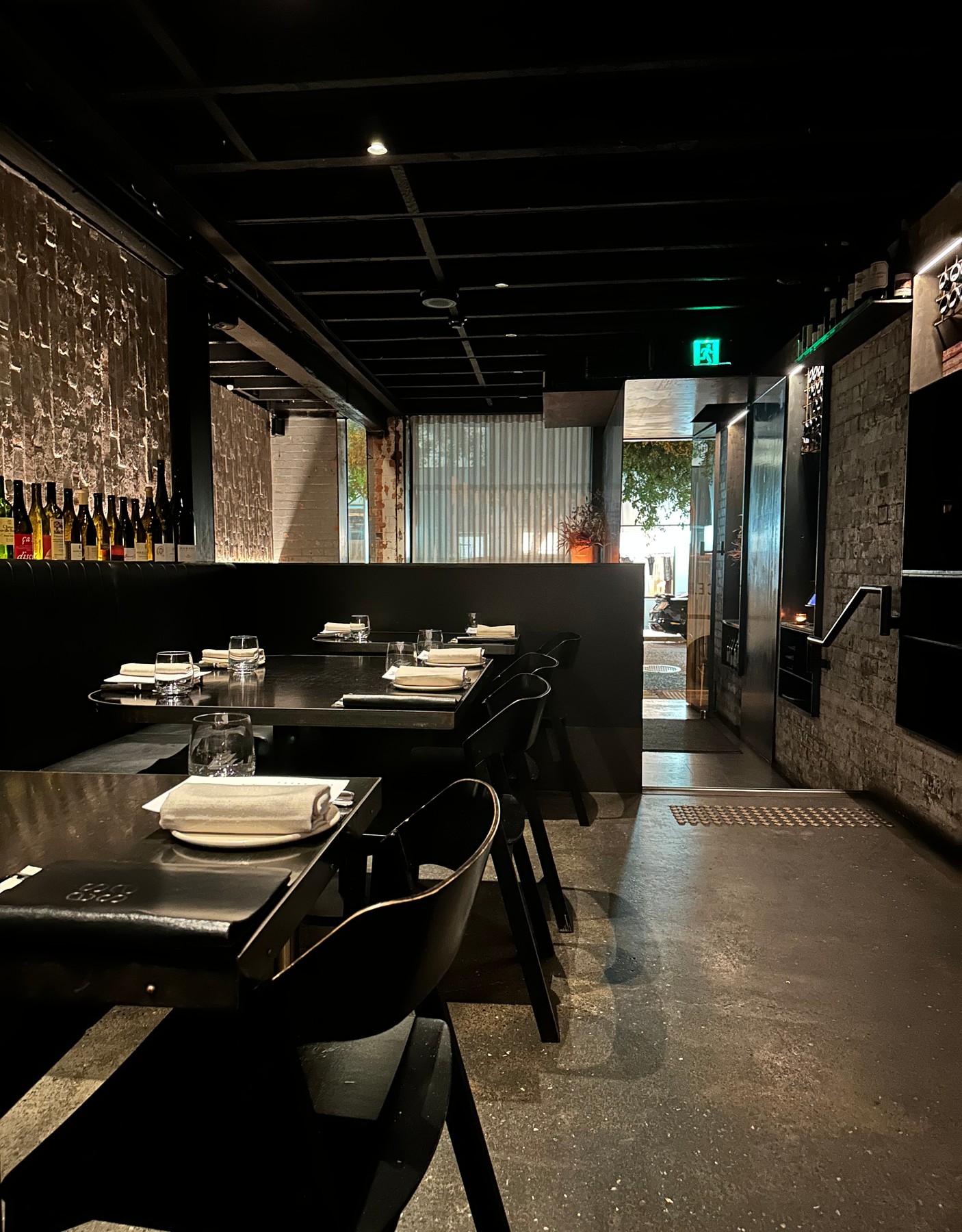
ESSA is long and narrow, with a bunch of tables at the front, the counter and bar section further in, and another dining area at the back. We’ve sat at the front and at the bar over our various visits, but for all the time we’ve spent here, the back section remains a bit of a mystery to us (I wonder if we’ll ever get to sit there?). This time the front window was open, letting the street noise mingle with the restaurant as Brisbane started warming up towards summer; a slightly different perspective on a room we know pretty well.
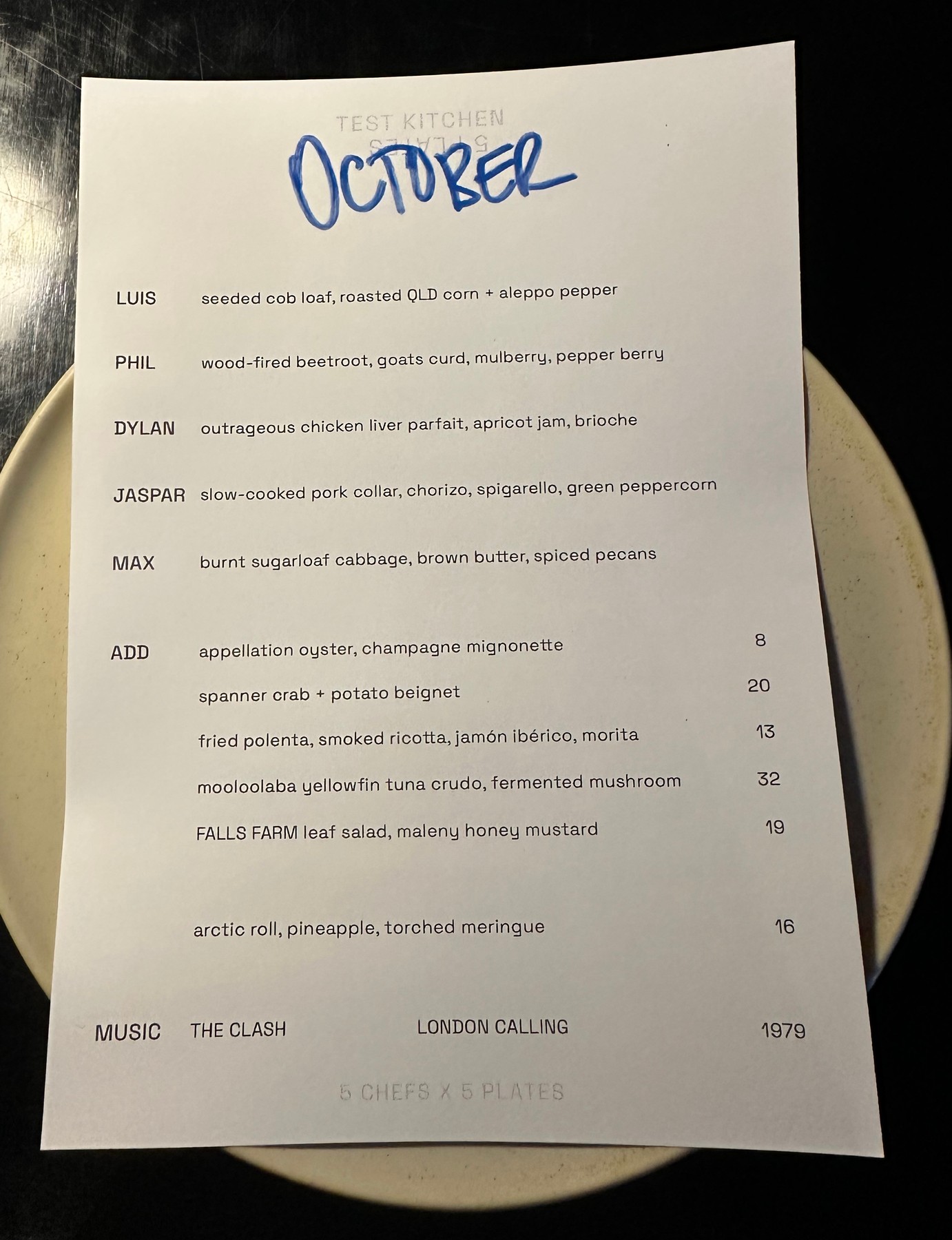
The October menu credited each dish to a member of the kitchen team, while the music credit went to The Clash and their 1979 album London Calling. It was a groovy accompaniment to dinner, and I really like that the music gets a place on the menu alongside the food.
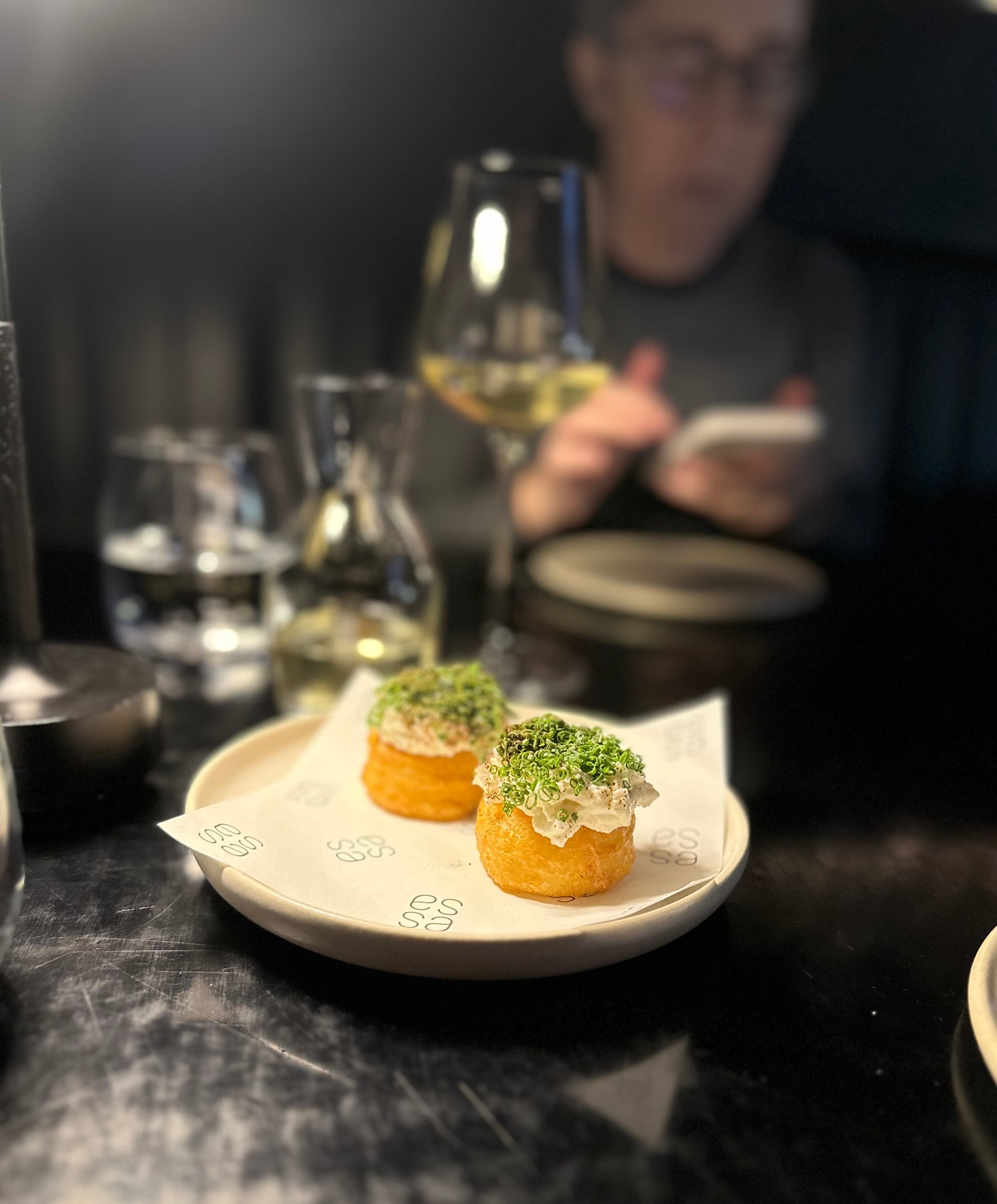
While the Wednesday menu is built around five set plates, there are extras available if you’re feeling particularly hungry, or, in our case, simply can’t go past the spanner crab and potato beignet. It’s become a bit like Groundhog Day; we order it on autopilot, enjoy every bite, then get to the end of the meal and remember that we’d decided last time we probably didn’t need the extra food. A lesson we conveniently forget as soon as the next menu lands in front of us.
The beignets arrived first, looking pretty on their little plate with the delicate spanner crab sitting on top and a scattering of chopped chives finishing them off. They’re just a little too substantial to comfortably disappear in a single bite, and picking one up gives you a better idea of why; there’s a lovely warmth and a bit of heft to the potato beignet, even though the texture when you bite into it is light, fluffy and airy. It’s an interesting combination, substantial enough to make its presence known but still light enough that adding it to dinner seems like a perfectly sensible idea. With the crab on top, it was every bit as delicious as we’d remembered, which probably explains why we never learn.
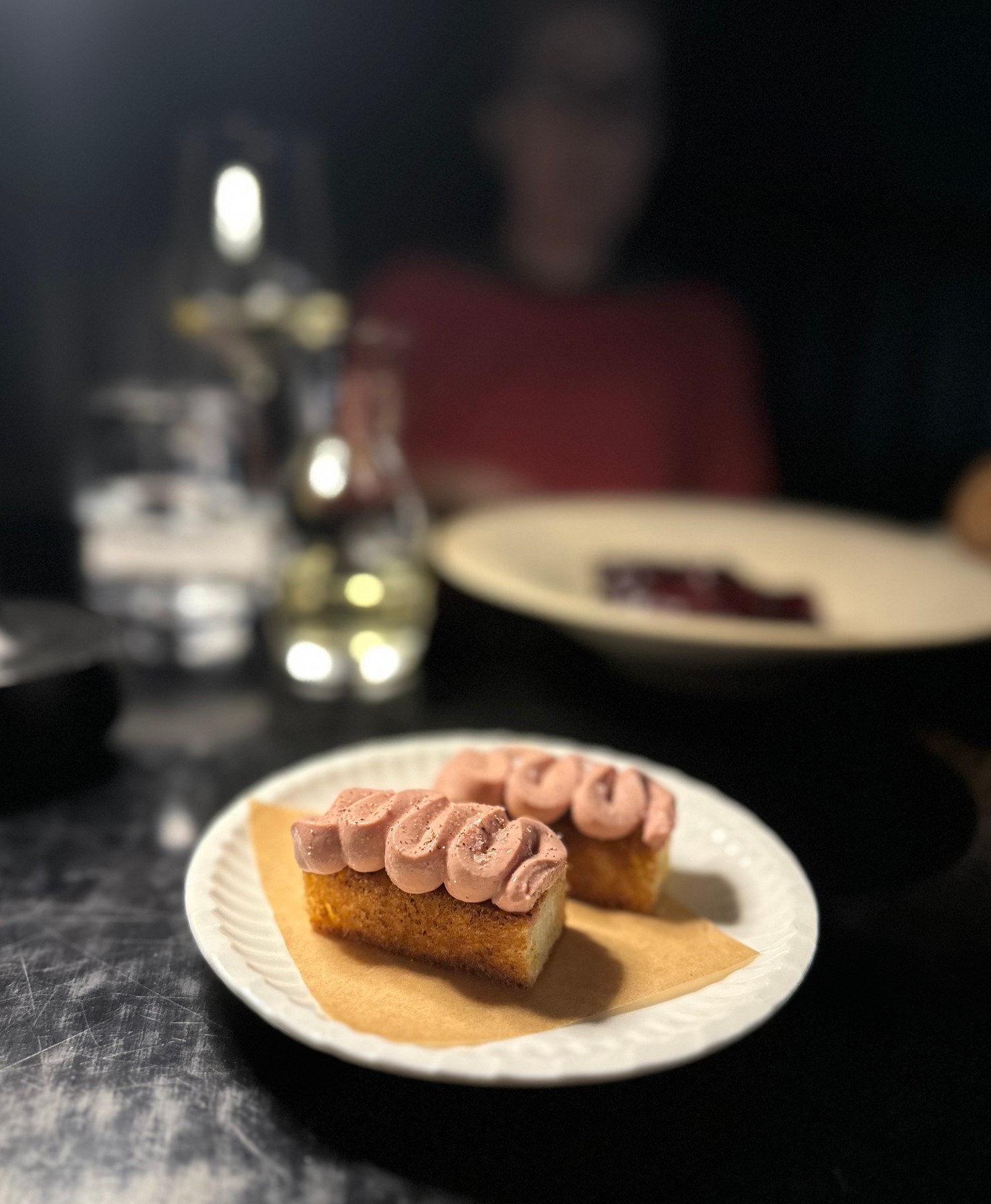
The first three plates from the Test Kitchen menu arrived together, leaving us to decide where to start, although Dylan’s chicken liver parfait made that decision pretty easy. Two rectangular blocks of brioche were topped with neatly piped parfait, with a little squidge of apricot jam tucked underneath; it was a pretty plate of food that tasted every bit as good as it looked. The light, sweet brioche gave each bite some texture against the incredibly smooth parfait, the two mixing beautifully on the palate.
Luis’s seeded cob loaf came with roasted Queensland corn, prepared as a creamy purée with a little lake of Aleppo pepper sauce sitting in the middle. Having been warned by the girl that the pepper was hot, I carefully spooned the corn onto my bread without disturbing the sauce, leaving her to enjoy the heat while I concentrated on avoiding it. Unfortunately, I’d made a rookie move with the bread, getting stuck into it before I remembered to take a photograph. Apparently hunger and excitement still get the better of me; you’d think I’d have this sorted by now.
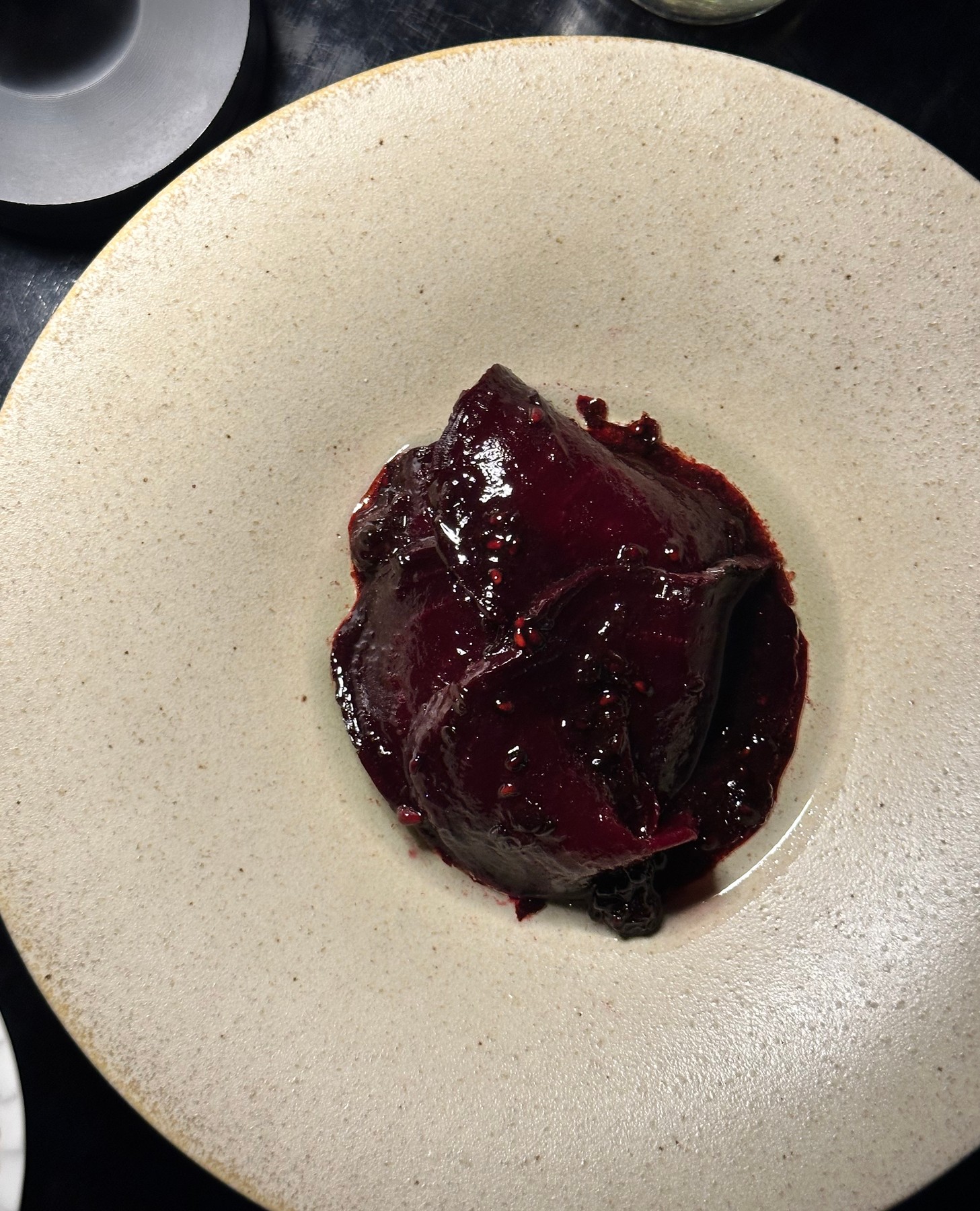
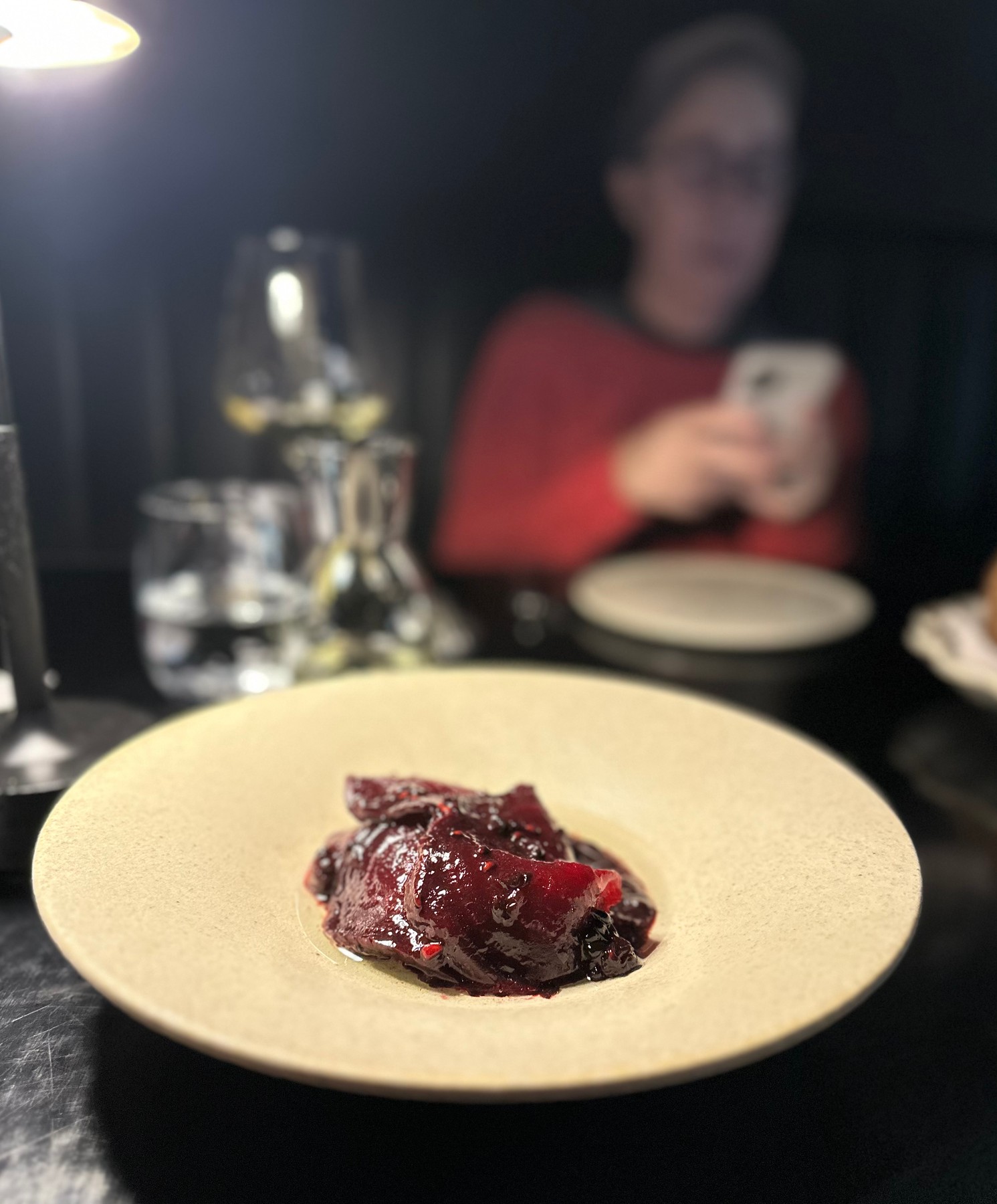
Phil’s wood-fired beetroot came with goat’s curd, mulberry and pepperberry, the thin slices of beetroot sitting over the curd in a generous little mound. Being a shared menu, we were back to our usual arrangement of one person dividing the dish and the other choosing their half; a reasonably effective way of making sure neither of us gets too creative with the portion sizes. The beetroot was earthy, rich and sweet, with a lovely give to the texture without becoming too chewy, while the creamy and subtle tartness of the goat’s curd worked brilliantly against that sweetness. My only complaint was that I’d have loved a little more of the curd; the beetroot was generous, and having more of that creamy contrast to carry through the whole dish would have made it even better.
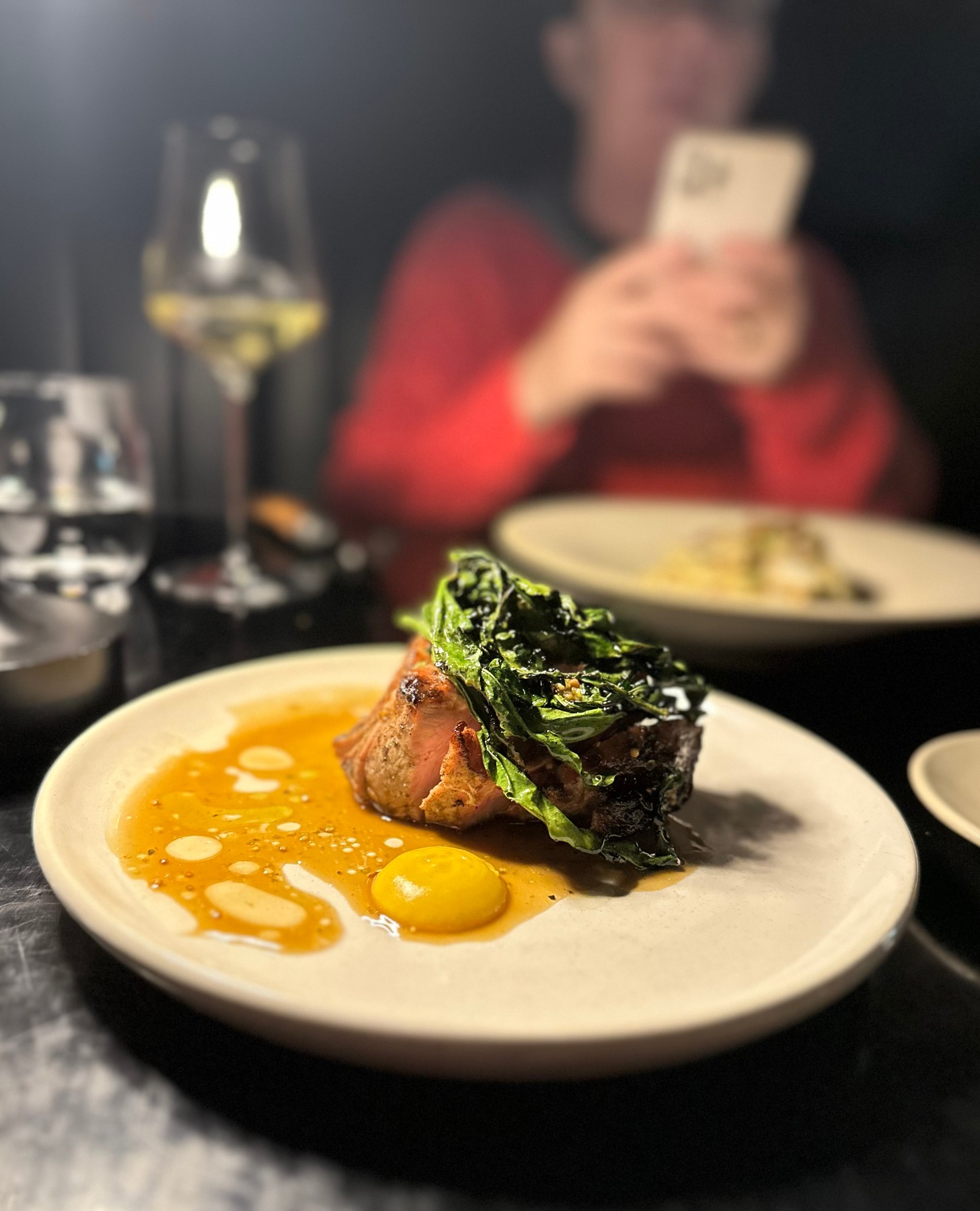
Jaspar’s slow-cooked pork collar followed with chorizo, spigarello, and green peppercorn. It was a rustic but pretty plate, sauce pooling around the pork and greens perched over the top, though I’ll admit the spigarello was soon picked off my portion so I could focus on the meat. The pork had this lovely char outside and was tender throughout. It arrived in five pieces, which can be tricky, but the girl was filling up and happily took two, leaving me with three, which suited me just fine.
Once we’d moved the pork onto our individual plates, there was still plenty of that sauce sitting on the shared plate, so we kept dipping the meat back into it to mop up a little more flavour. There was a sweetness to the sauce that worked really well with the pork, along with an extra richness that may well have come from the chorizo. Whatever was contributing to it, the combination of the tender pork, the char on the outside and that lovely sauce made those three pieces very easy to get through.
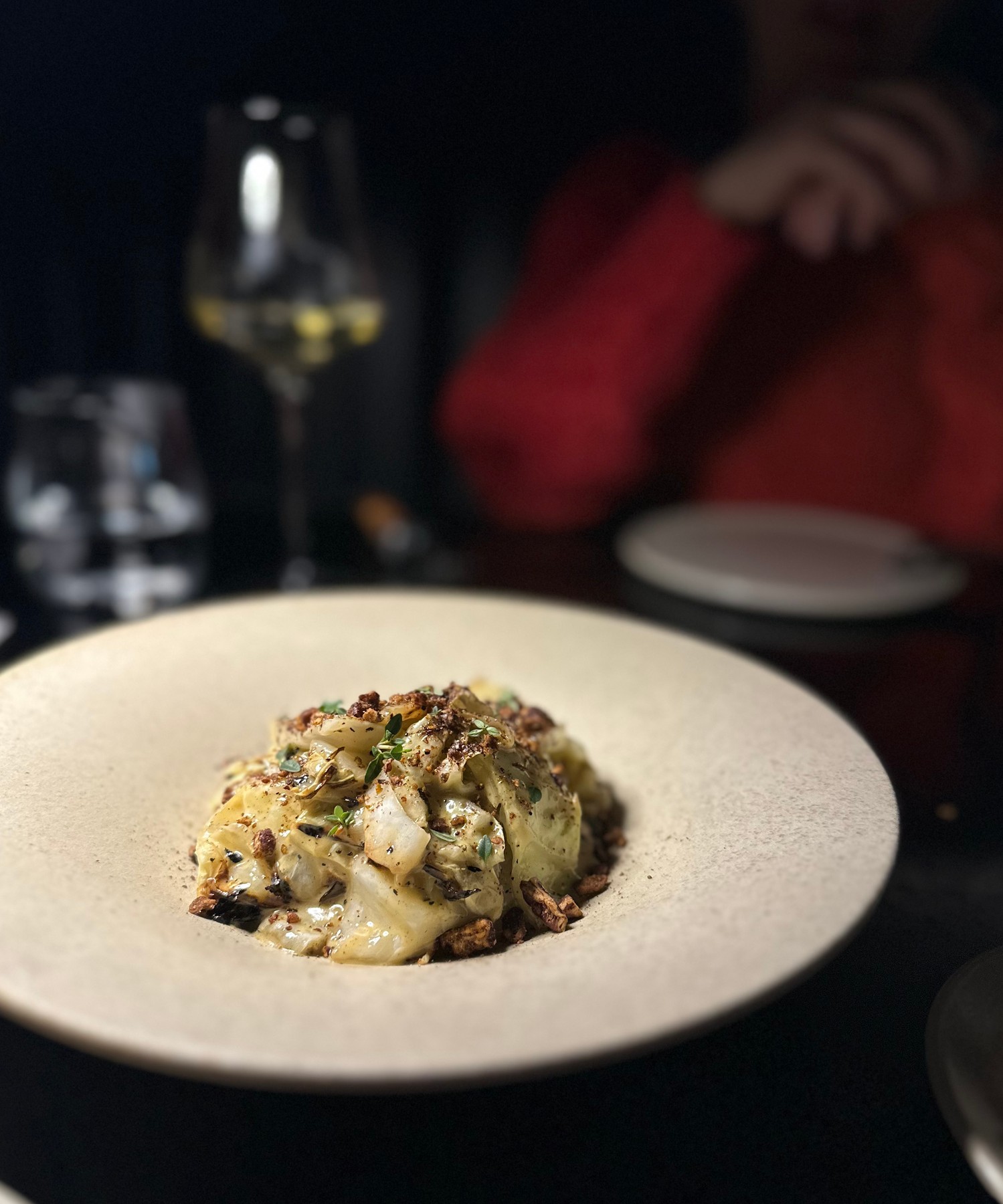
The burnt sugarloaf cabbage from Max was probably the least showy dish on the table, but it turned out to be outstanding. It came with brown butter and spiced pecans, and when I say brown butter, I mean that the cabbage was practically drowning in it. That generosity made it so delicious, the butter carrying through the cabbage with the pecans adding little bits of crunch along the way. It was the sort of dish that makes a fairly basic-looking plate of cabbage something you want to keep going back to, even when you’re starting to wonder how much more dinner you can actually manage.
And that was our problem by this point; we were quite full, and as delicious as the cabbage was, all that richness was becoming a little overwhelming. We didn’t finish it, which had us reflecting once again on the wisdom of ordering the extra beignet.
I only ever eat until I’m full, so leaving some food behind isn’t something I have a problem with, but there is a trade-off when the food at both ends of the meal is this good. Have the delicious crab beignet at the beginning and leave a little of the equally delicious cabbage, or skip the extra and give ourselves a better chance of getting through the menu. We seem to keep choosing the former.
It was another reminder of why we enjoy coming here on Wednesdays. The menu was creative, interesting and fun to eat, with enough variety to keep us curious even after so many visits. At around $70 per person for the Test Kitchen menu before extras, it’s also amazing value for the quality of the cooking and the restaurant; a very good answer to that pesky midweek dinner question. We do regularly talk about getting back on other nights a little more often, but I suspect Wednesdays will keep drawing us in.
Whether we’ll remember that we don’t need the beignet next time is another matter entirely.